Home > Columns > Executive Interviews
Inbenta Executive Interview
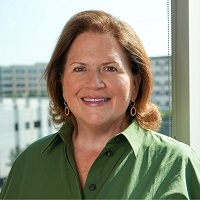
Melissa Solis, CEO, Inbenta
Click image below to view the ebook

Resilience, Reinvention, and AI Innovation: Sheri Greenhaus
Talks with Melissa Solis
In a candid and wide‑ranging conversation, Sheri Greenhaus,
Managing Partner of CrmXchange, sat down with Melissa Solis, CEO of Inbenta, to
explore the personal journey, leadership philosophy, and strategic vision
behind one of the industry’s most rapidly evolving AI companies. Their
discussion moved from Melissa’s remarkable life story and the resilience that
shaped her, to the transformation underway at Inbenta, and finally to the
shifting realities of the AI market, where both leaders offered grounded
insights into what enterprises truly need to succeed.
Personal Story
Sheri Greenhaus: I was looking through your background, and
I’m always impressed with people who don’t give up. It takes inner strength to
say, “I’m not a victim, I’m not giving up.” What gave you that capability?
Melissa Solis: I remember being a little girl. My mom was on
food stamps, the old paper coupons. People behind us in line would make fun of
us. My dad had left my mom with four children and took everything: the
furniture, the car. We came back to an empty trailer with our clothes on the
floor.
My mom cut a hole in the side of the trailer, and an old
farmer gave us a saw so we could cut wood for a small stove. We’d go out and
cut fallen trees by hand, and my sisters and I slept on a table someone had
given us.
Growing up with so much hardship; dyslexia, poverty, trauma,
shaped me. Women crave real conversation, and that’s why I’m open about my
story, including my abusive marriage.
I’m a living example of the American dream. You can
accomplish anything when you know your value and refuse to quit. “Quit” isn’t
in my vocabulary.
Sheri Greenhaus: I wish more people felt like that. Some
fall into “poor me,” which I’ve never respected. Pick yourself up and do what
you need to do.
Melissa Solis: I saw my mother get beat down. She cried at
night when she thought we couldn’t hear. Divorce was a stigma then; no one
reached out to her. One Christmas after my dad left, we had no food. A woman my
mom babysat for, someone everyone judged for what she did at night, brought us
food and gifts.
Sometimes help comes from the least expected place.
Seeing my mom abused made me determined not only to rise
above it but to share my story. After I spoke at CCW Women, I received messages
from women who were hurting.
I want people to know: the only way you lose is if you stop
moving.
Faith and Foundation
Sheri Greenhaus: It seems your faith had a lot to do with
your strength.
Melissa Solis: Huge. I was raised in church but walked away
at 16. I was tired of being poor and bitter at God. Why was He letting me go
through all this?
At a private school my mom worked at, I realized how poor we
were. I saw abuse, including men sexually abusing girls. I thought, “If this is
God, I don’t want any part of it.”
From 16 to 27, I didn’t go to church.
Then I married someone extremely abusive. One night he came
home high, picked up the mattress, threw me and my daughter off, and said, “If
you’re here when I get back, I don’t know what I’ll do.”
I grabbed my daughter and left with nothing but a diaper
bag. She was on an apnea monitor. I drove 45 miles to my mom’s.
During that drive, I realized God loved me. That was the
beginning of my relationship with Him.
It’s been a journey; you don’t lose bitterness overnight.
But it’s the one steady force in my life.
I’ve had three open‑heart surgeries. I was born with a bad
aortic valve and an aneurysm. After my most recent surgery, I told my team,
“I’ll be back.” Six days later, I was already working again.
It’s all about perspective, knowing where your hope lies and
charging toward it.
Sheri Greenhaus: You weren’t going to let anyone beat you
down.
Melissa Solis: No. And I realized I have a responsibility to
share my story, to be a vision of hope for others.
The Inbenta Journey
Sheri Greenhaus: With all your history, why were you
attracted to Inbenta?
Melissa Solis: I retired. Made a lot of money. Didn’t need
to work. I became my husband’s full‑time CEO, color coding his calendar and
making lists.
One morning he said, “Melissa, you are not my CEO. I don’t I
need you to color code me.” We laughed. Then he told me, “You have too much
energy. You need to go do something.”
I wanted to help women. I look at my granddaughters,
beautiful girls, and my middle one says, “Grandma, I want to do what you do.” I
realized it will be a hard road. We’re not going forward; we’re going backward.
So, I started looking. We’d done machine learning and AI,
but not at this level. I kept telling Merlin, our CTO, “Something’s about to
happen. There are huge gaps. Everyone’s unhappy. No one’s cornered the market.”
I looked at about 100 companies across Asia, India,
everywhere. Then I found Inbenta.
They had great technology but lacked the processes and
procedures needed to scale, especially in North America. But their natural
language processing was advanced, beyond anyone we saw, with huge clients in
Europe and North America.
I said, “We can build on this.”
We bought it. Three months later, ChatGPT arrived, and
everything changed fast.
Legacy providers weren’t going to modernize. They’d buy
things, stitch them together, put lipstick on it, and call it innovative. AI is
moving too fast; they’d get left behind.
So, we re‑architected and modernized the platform. Encore is
truly modern, not old tech. We kept proprietary NLP knowledge but rebuilt
everything.
We flipped the whole model on its head:
- Knowledge management is the biggest struggle.
-
Speed to deployment is too slow.
-
Maintenance is too heavy.
-
Governance and compliance are lacking.
-
GenAI has no controls.
We use LLMs for what they’re good at and our proprietary
processes for governance, accuracy, and token efficiency. We use 50–60% fewer
tokens than typical GenAI RAG systems.
The market is reacting. At CCW, I haven’t had anyone tell me
no.
AI Market Insights
Sheri Greenhaus: We do a lot of webinars at CrmXchange.
Everyone says, “We have to have AI.” I ask, “For what?” They say, “We don’t
know … leadership just said to do it.”
Melissa Solis: Exactly. Everyone says they’re “doing AI.”
But how is it helping? What’s the ROI?
I tell my team: stop saying things you can’t prove.
I understand call centers as I’ve done everything from
answering phones, running units, opening service centers. On a panel I was on,
people claimed they proved certain outcomes. I asked what data they used. They
didn’t have it.
Then you don’t know.
You need the full customer journey. If someone interacts
with a voice bot or chat, where do they go next? Did they really get help? Or
do they call afterward?
Unless you see the full picture, you don’t know whether you
resolved it.
Vendors rush to say they’re doing AI without thinking it
through.
We work with companies that give us full data. Then we can
prove resolution rates. But unless you have the full picture, you don’t know.
Sheri Greenhaus: A lot depends on data and being able to
pass it across divisions. Last week I dealt with Spectrum, AT&T, and
Synchrony Bank. I started with a bot, which didn’t work. Chat moved me to a
person, which forced me to start over. That didn’t work either, so I called
while still chatting. Each conversation lasted almost an hour, and none of them
were able to pass my information along.
Melissa Solis: Exactly. Look at American Airlines. I fly
constantly. One day I tried to change a ticket booked with rewards. I asked how
to book it and they told me how to take a pet on the plane.
Companies buy piecemeal providers, voice here, channels
there, none talking to each other.
You need:
- A knowledge base that transcends all channels
-
Consistency
-
Ability to transact across channels
-
Internal and external alignment
Customers get frustrated when given wrong information.
This goes back to rushing to implement AI without
understanding it, or IT picking vendors without talking to the people doing the
job.
At Inbenta, no one gets to be on an island. We work as a
team.
Additional Perspective from Matt Thompson, CMO, Inbenta
I’m still relatively new to the industry, but one thing I’ve
picked up quickly is that there are several major perception gaps among buyers.
Because of all the noise vendors have been making in this space, people walk
into conversations with assumptions that simply aren’t true.
One of the biggest perception gaps is the belief that you
have to get all your knowledge in perfect order before you can move forward.
There is a huge fear around this because historically it meant a lot of money,
a lot of time, and a lot of professional services. We probe on that because
once we get into the conversation, we can change their perception about what is
possible. The technology exists today to clean up knowledge in a much more
efficient way, and most buyers don’t realize that.
Another perception gap is around integration. Many buyers
think they have to rip and replace what they already have. If they are locked
into a system like Genesys, NICE, or Five9, they walk around the showroom floor
thinking they have no options because they cannot tear out what they already
invested in. When I talk to them, I explain that they do not have to remove
anything. We integrate with all of those platforms, and many of our customers
start by addressing a single problem those systems are not solving. We can
begin there. We do not have to replace their existing environment. We can
integrate and even pass data through so they can stay in the system they
already use.
Compliance is the third major perception gap. People are
afraid of hallucinations and of being wrong. They do not want to come across as
if they do not understand how AI works. What they do not realize is that
hallucinations are not caused by the entire AI system. They come from how the
large language models behave. LLMs are excellent at understanding what someone
is trying to say. They are not nearly as good at answering. They try their
best, but answering is not their strength. Understanding is. We use LLMs for
understanding, but we do not use them to answer. That distinction leads to very
powerful conversations.
Sheri Greenhaus: When someone approaches you at CCW, how do
you figure out whether Inbenta can genuinely help them?
Melissa Solis: We tailor our approach to each event. At
Gartner, the audience is highly technical; at CCW, it’s mostly operational
leaders with some IT. We start with the basics: What is your goal? What are you
trying to accomplish? What pain points are you trying to solve? Where are you
in your AI journey?
Many people admit they haven’t started. They feel frozen by
the noise in the market and afraid of making mistakes. When that happens, I
tell my team not to pitch. Instead, we say, “Let’s talk after the show.”
Education is often the first step. We even offer classes that teach AI
fundamentals, terminology, and how to work with IT teams. Most people simply
need clarity.
The next group has already deployed a solution, but their
knowledge base is wrong. They’re giving inaccurate answers, maintenance is
overwhelming, and they’re frustrated after spending significant money. Encore
solves this easily. Our automated approach to knowledge, graphing, intents, and
answers gives full compliance and complete transparency. We fix the problem and
integrate with what they already have so they don’t have to explain wasted
spend to their CFO.
The third group is more advanced. They may have a solution
but need voice, which is difficult to get right. Sometimes we start with one or
two components, but once we’re in, we often take over quickly because we care
deeply about customer success. I’m personally involved. Our philosophy is
simple: your success is our success. We want customers for life.
We achieve that by treating people the way we want to be
treated. I call customers regularly to ask how they’re doing. We stay engaged,
and we listen. We remind ourselves that we have two ears and one mouth for a
reason. When you ask the right questions and stay quiet, people will tell you
exactly what you need to know.